
One accountable chain, end to end
Everything we do covers one route: the journey a medicine takes from a production line to the institution or patient waiting for it, and the documentation that journey requires at every stage.

Wholesale distribution
DISTRIBUTIONWe supply branded and generic medicines, nutraceuticals and surgicals to hospitals, pharmacies, healthcare institutions and distribution partners, managing every step from sourcing through to delivery.
- Purchased only from authorised manufacturers and licensed wholesalers
- Branded medicines, generics, nutraceuticals and surgicals
- Hospital and institutional accounts
- Temperature-controlled handling where the product requires it

Contract manufacturing
MANUFACTURINGBuilding and validating a pharmaceutical facility takes years and consumes capital that most products cannot justify. Contract manufacturing puts your product onto lines that are already built, already validated and already inspected — produced under your brand, to your specification.
- Formulation and development support
- Scale-up and technology transfer from an existing site
- Commercial production under GMP conditions
- Analytical testing, stability studies and batch release

Named patient supply
ACCESSA named patient programme allows one specific, identified patient to receive a medicine that is not registered or not marketed in their country, on the prescription of their treating physician. Most regulatory systems provide for this, because approval timelines do not move at the speed of an individual illness.
- Feasibility and honest timeline before you commit
- Sourcing from licensed suppliers at origin
- Import permit application and regulatory file
- Prescription, justification and physician declarations
Please read. Every named patient import begins with a valid prescription from the treating physician and follows the import law of the destination country. We cannot supply without one, and we cannot advise whether a treatment is appropriate for a particular patient — that judgement belongs to the prescribing doctor.

Reference listed drugs
SOURCINGA bioequivalence study is only as defensible as the reference product it was run against. Obtaining that product — correct strength, correct market of origin, sufficient remaining shelf life, documentation that survives regulatory review — is routinely the slowest step in a generic development programme.
- FDA and EMA approved reference products
- Sourced from the market of origin your filing requires
- Comparator supply for clinical trial programmes
- Restricted-distribution and limited-supply products

Exports and international supply
EXPORTPharmaceutical export failures are almost never freight failures. They are documentation failures discovered at a border, with product sitting in a bonded warehouse while its shelf life runs down.
- Market-specific regulatory documentation
- Certificates of analysis, free sale and GMP certificates
- Labelling and artwork compliant with the destination
- Export clearance with the importer of record
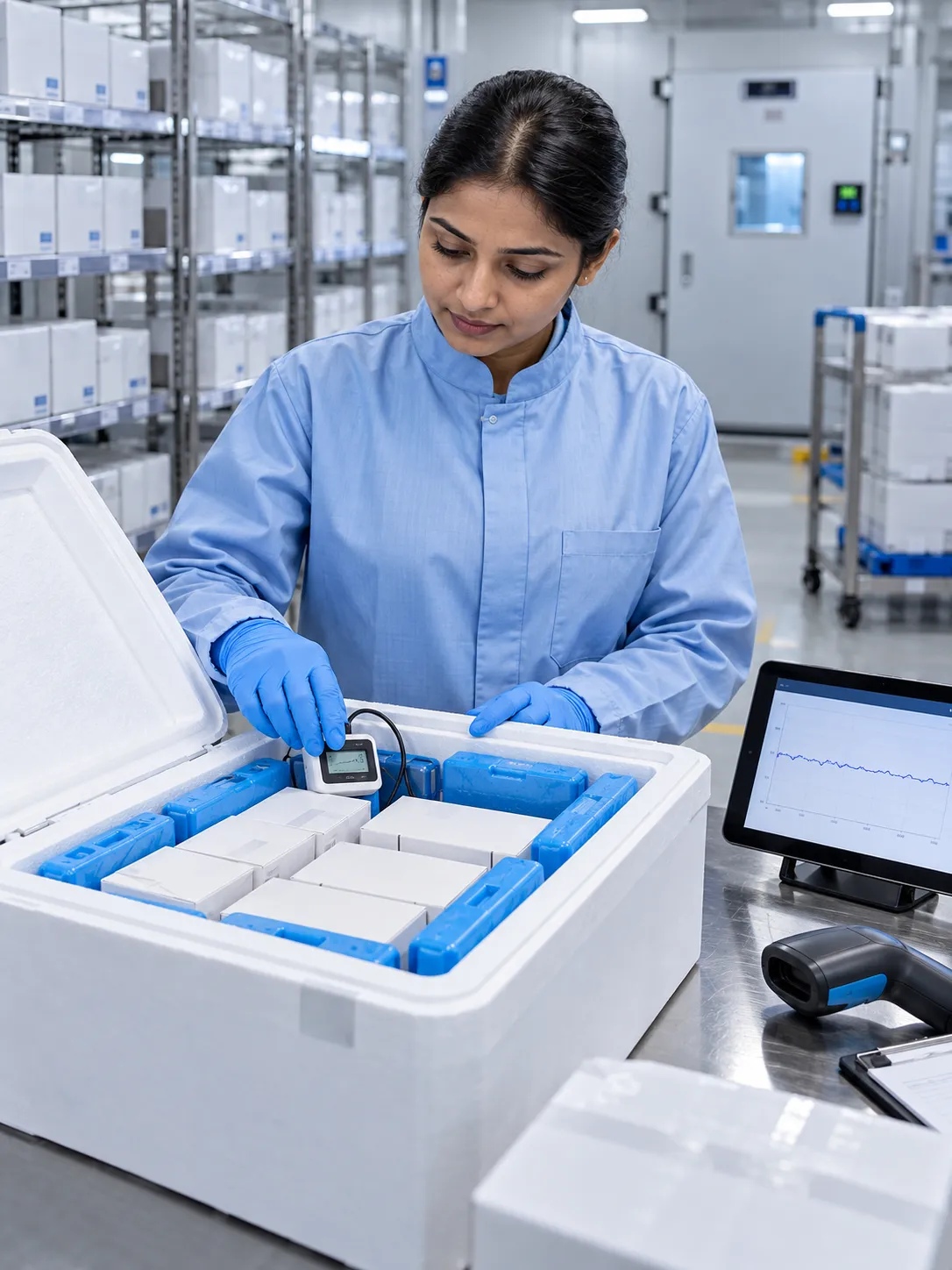
Cold chain and supply chain
LOGISTICSA biologic that spends four hours outside its temperature range is no longer the product that left the manufacturer, whatever the carton says. For oncology agents, biologics and antivirals, cold chain is not a service feature — it is the condition on which the product remains usable at all.
- Collection from the licensed supplier under travelling conditions
- Validated packing matched to route duration and ambient conditions
- Data logger monitoring across the whole journey
- Shipment status visible to you throughout

Registration assistance
REGULATORYGetting a product registered in a new market is usually slower than getting it made. Each authority specifies its own dossier format, its own certificate requirements and its own legalisation chain, and a submission that misses any of them goes back to the start of the queue.
- Dossiers in CTD and ACTD format
- Certificate of Pharmaceutical Product (CPP)
- Free-sale certificates and GMP certificates
- Legalisation and apostille

Tender and programme supply
TENDERSPublic-health procurement runs on tenders, and tenders are won or lost on paperwork before price is ever compared. A bid that arrives without the right certificates, in the wrong format, or with a product whose registration status is unclear is disqualified regardless of what it costs.
- Tender documentation prepared to the buyer’s format
- Pre-qualification support for institutional bids
- Registration status confirmed before you commit
- Programme supply for oncology and HIV

Medical information
SUPPORTInstitutional clients and clinicians frequently need product information that goes beyond a pack insert: stability data, handling requirements, storage conditions, presentation differences between markets, or the availability of alternative strengths.
- Stability and storage data from manufacturer documentation
- Handling and reconstitution requirements
- Presentation and strength differences between markets
- Availability of alternative strengths or formats
From first enquiry to delivered goods
Enquiry and quote
Send the product, strength, quantity and destination. We reply with availability, landed pricing and the documents your market needs.
Confirm and document
Specification agreed, registration and export paperwork prepared, supply plan confirmed before anything ships.
Source and verify
Product from licensed sources only, with certificate of analysis, batch records and packaging checked before dispatch.
Ship and hand over
Freight booked, cold chain held, documents travelling with the goods, and the temperature record handed over at delivery.
Licences and audit documents are available to qualified buyers. Drug licence, quality certificates and supplier documentation during qualification — ask for them with your enquiry.
End-to-end support, from first enquiry to after delivery
One team handles sourcing, documentation, shipping and follow-up, so you are not coordinating four suppliers who each hold one piece of the process.